Pete Buttigieg Is Bootleg Obama in the Worst Ways Possible
Pete Buttigieg, a shape-shifting knockoff of the Obama original, has written a book about the importance of Trust — a surprising topic for a politician who elicits suspicion every time he opens his mouth. Can we just let bootleg Obama wander off into obscurity?
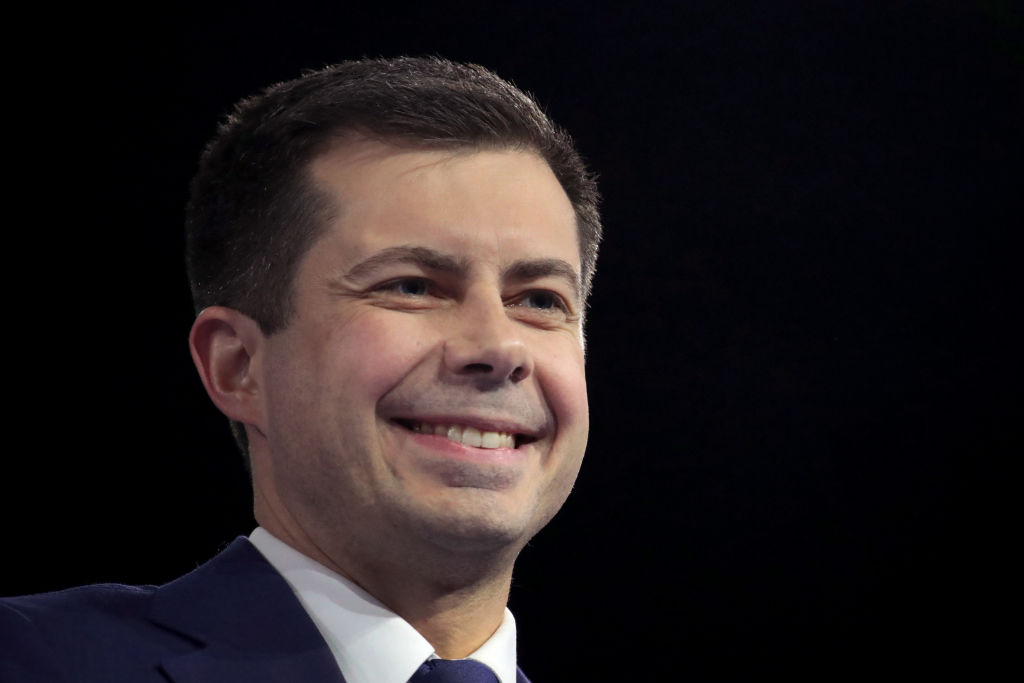
Pete Buttigieg on February 8, 2020 in Manchester, New Hampshire. (Scott Olson / Getty Images)
There’s a famous aphorism often attributed to Miles Davis which says that the notes you don’t play in jazz are more important than the ones you do. Much the same can be said of political memoirs and, indeed, most books written by politicians or professional apparatchiks, particularly if published during an election year: being a genre largely concerned with PR and brand-building, they tend to be heavy on pablum and featherlight when it comes to substance; glorified press releases masquerading as earnest reflections or honest tales of personal triumph in the face of adversity. To any but the most credulous reviewer, they therefore present something of a dilemma. How exactly, after all, are you supposed to write about what isn’t there?
Apocryphal though they may be, this is where the words ascribed to America’s great jazz innovator really come in handy. In my experience as a regular (and almost always reluctant) appraiser of books and speeches by liberal and centrist politicians, identifying the blank space — the things left unsaid, the issues unaddressed, the possibilities elided, the questions unanswered, the past events ignored, the facts omitted, etc. — can often get you quite a long way.
David Plouffe’s A Citizen’s Guide to Beating Donald Trump, for example, spends just over 250 pages telling readers to canvass, phone bank, and write approving social media posts about a generic and entirely hypothetical Democratic nominee. Tasked with reviewing it, I was initially stumped about what, if anything, to say — an ostensible handbook for fighting the Right with scant reference to ideology, program, or social vision not exactly offering up a lot of raw material with which to work. My writer’s block persisted until I realized that Plouffe’s omissions were precisely the point, his vision of liberalism being one that either treats most real political questions as settled or considers them none of the average person’s business (the permissible kind of rank-and-file activism in the modern Democratic Party being about deference to party elites and not much else).