The US Government Can Provide Universal Childcare — It’s Done So in the Past
The United States distinguishes itself as one of the few wealthy countries in the world that does not have a robust public childcare program. But there’s no reason we can’t have one that’s wildly popular and provides high-quality care — in fact, during World War II, we did.
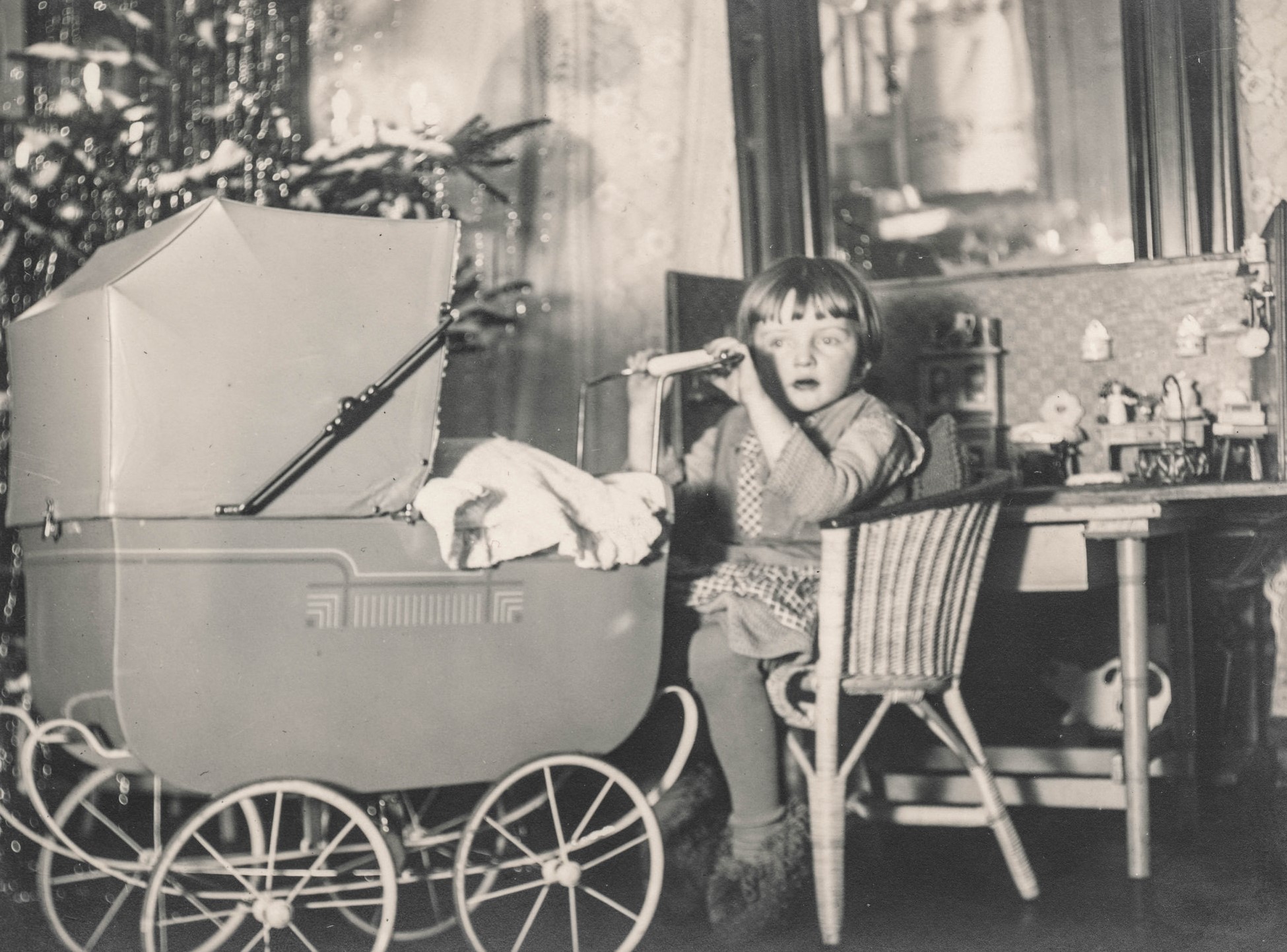
A little girl sits with a doll house and baby carriage, undated. (Flickr)
Government funding of childcare is almost as popular in the United States as Tina Turner. A bipartisan majority of Americans believe that every child (and every parent), regardless of income, deserves high-quality preschool education. A whole swath of liberals have argued that the economy would benefit from greater numbers of mothers in the workforce, and by improving the employability of millions of children in the future.
They’re right. The proof? It’s already been done.
In 1942, the US government passed the Lanham Act. The law was designed to assist communities with water, housing, schools, and other local needs connected to industry expansion during the World War II war effort. One of those provisions was a universal childcare plan for any community that proved they had absent fathers and working mothers — the only instance in American history of a federally administered program that served children regardless of family income.