How Community Land Trusts Can Help Address the Affordable Housing Crisis
The United States is in the middle of a massive housing crisis. Community land trusts can help address it.
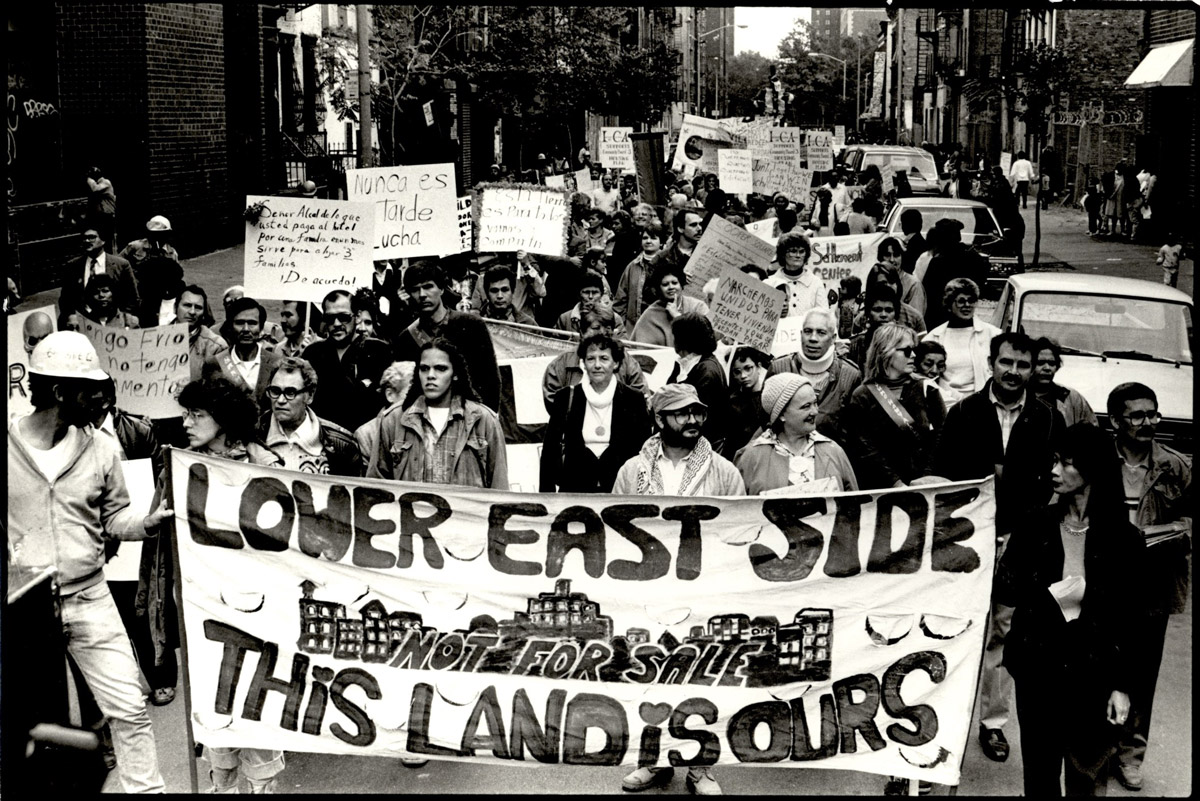
Tenants march in a protest in the Lower East Side in New York. (Marlis Momber)
Over the past fifty years, cycles of disinvestment and aggressive reinvestment in urban real estate markets, stagnating wages, and neoliberal shifts in federal housing policy have created a complex housing system that is fueled by debt and fails to serve a large swath of the population. Housing advocates continually struggle with logistical questions about the longevity and depth of affordability in affordable housing and structural questions about the roles of the market and the state in the provision of housing.
It is difficult to pin down the functional definition of what a house is in America: shelter, sanctuary, a societal building block, a wealth building mechanism, and/or a commodity. What is clear, from high rent burdens, widespread evictions, and growing homelessness, is that existing tools are not working.
Over the past few years, the community land trust (CLT) model has been increasingly promoted as a solution by affordable housing advocates of many kinds, from anti-gentrification and tenants advocates to traditional community development organizations to large philanthropic institutions like the Ford Foundation and the Federal Reserve. The CLT model is highly flexible, and has huge potential for addressing the affordable housing crisis in America today.