May Day, Bloody May Day
On Berlin’s May Day 1929, the latent hostility between Social Democrats and Communists finally spilled over into bloodshed. A day meant to demonstrate workers’ unity instead showed tragic divisions in the face of rising Nazism.
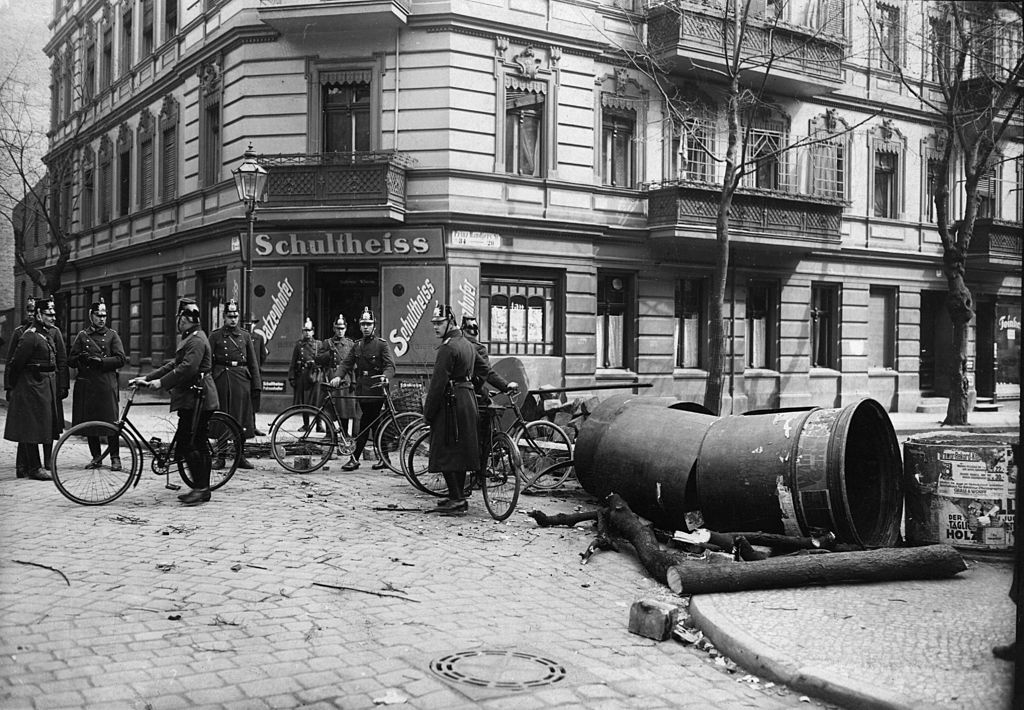
A police cycle patrol guarding one of Berlin’s barricaded streets, 1929.Keystone / Getty
May 1 is a day to commemorate the socialist movement’s history, celebrate our victories, and mourn our defeats. This year it also marks the ninetieth anniversary of a self-inflicted wound on the German left that cemented divides between Social Democrats and Communists and helped pave the way for the Nazi takeover. The Blutmai, or “Bloody May” of 1929 serves as a reminder of what can go wrong when the stakes are high and the socialist movement loses its bearings.
The clash was part of an ongoing and increasingly violent rivalry between the Social Democratic (SPD) and Communist (KPD) parties of Germany, each a massive organization in its own right with hundreds of thousands of members and millions of supporters. The SPD had governed Berlin as the junior partner in a centrist coalition since 1921. Fearing political violence between Nazi stormtroopers and the Communists’ Roter Frontkämpferbund (RFB), the government declared a ban on public demonstrations in early 1929.
Social Democrats and bourgeois politicians alike feared that Berlin was becoming a battleground for the far right and the far left. The Communists in turn viewed the ban as an affront, further evidence of the SPD’s betrayal, and planned to march anyway. Their zeal, the SPD’s intransigence, and the police’s penchant for excessive force would ultimately cost thirty-three people their lives. Worse, the sharpening clashes between the workers’ parties would leave German democracy defenseless faced with the rise of Nazism.