Belgium Is No Island
In Belgium, far right ideas are entering the political mainstream.
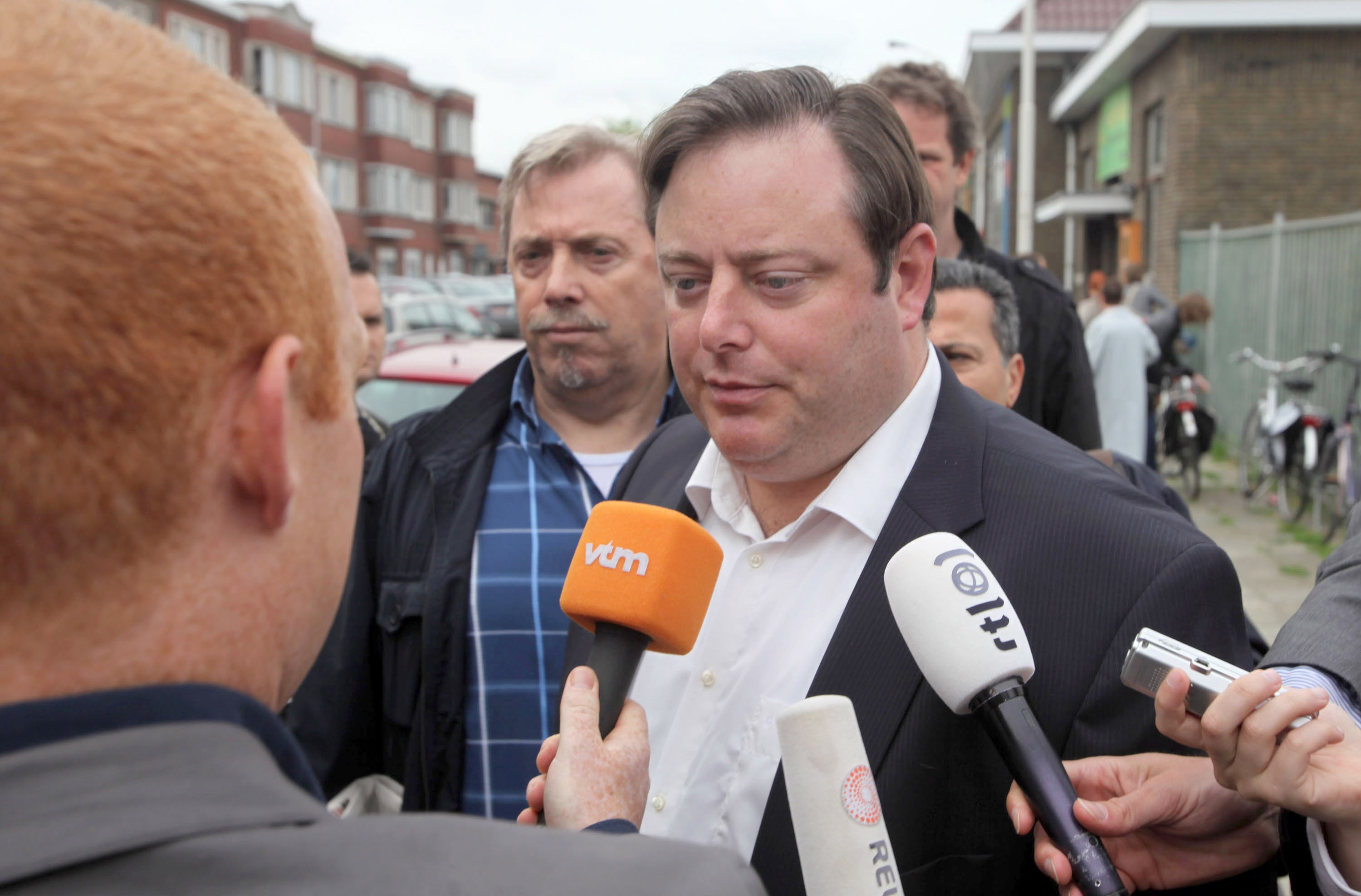
Leader of N-VA (New Flemish Aliance) Bart De Wever faces the international media as he leaves Berchem public school after voting on June 13, 2010 in Antwerpen, Belgium.Mark Renders / Getty
Over the last four years Belgian premier Charles Michel’s government had rallied a broad swath of the Right. In 2014 his Reformist Movement and its liberal allies made a pact with the Flemish nationalists of the New Flemish Alliance (N-VA) and the Flemish Christian Democrats, uniting on a Thatcherite platform of increasing the pension age and slashing sickness benefits. Yet other differences lingered.
While the liberal parties admire French president Emmanuel Macron, the Flemish nationalists stand much closer to Hungary’s Viktor Orbán. And with national elections just months away, last week the N-VA decided to pull the plug on the government. The stated reason: the Prime Minister’s support for the United Nations’ Global Compact for Migration, which foresees international cooperation on handling this issue.
Indeed, the fall of the Belgian government sheds light on a worrying development, extending beyond its borders. Today, the whole political climate is shifting to the right. Not only is nationalism the talk of the day, but social movements are under attack and universal human rights are under threat. Ideas which until recently seemed the sole prerogative of the far right are now becoming mainstream: not just in Belgium, but around the world.