(Still) Manufacturing Consent
Matt Taibbi on Noam Chomsky's classic book Manufacturing Consent and how commercial imperatives still squelch an adversarial press.
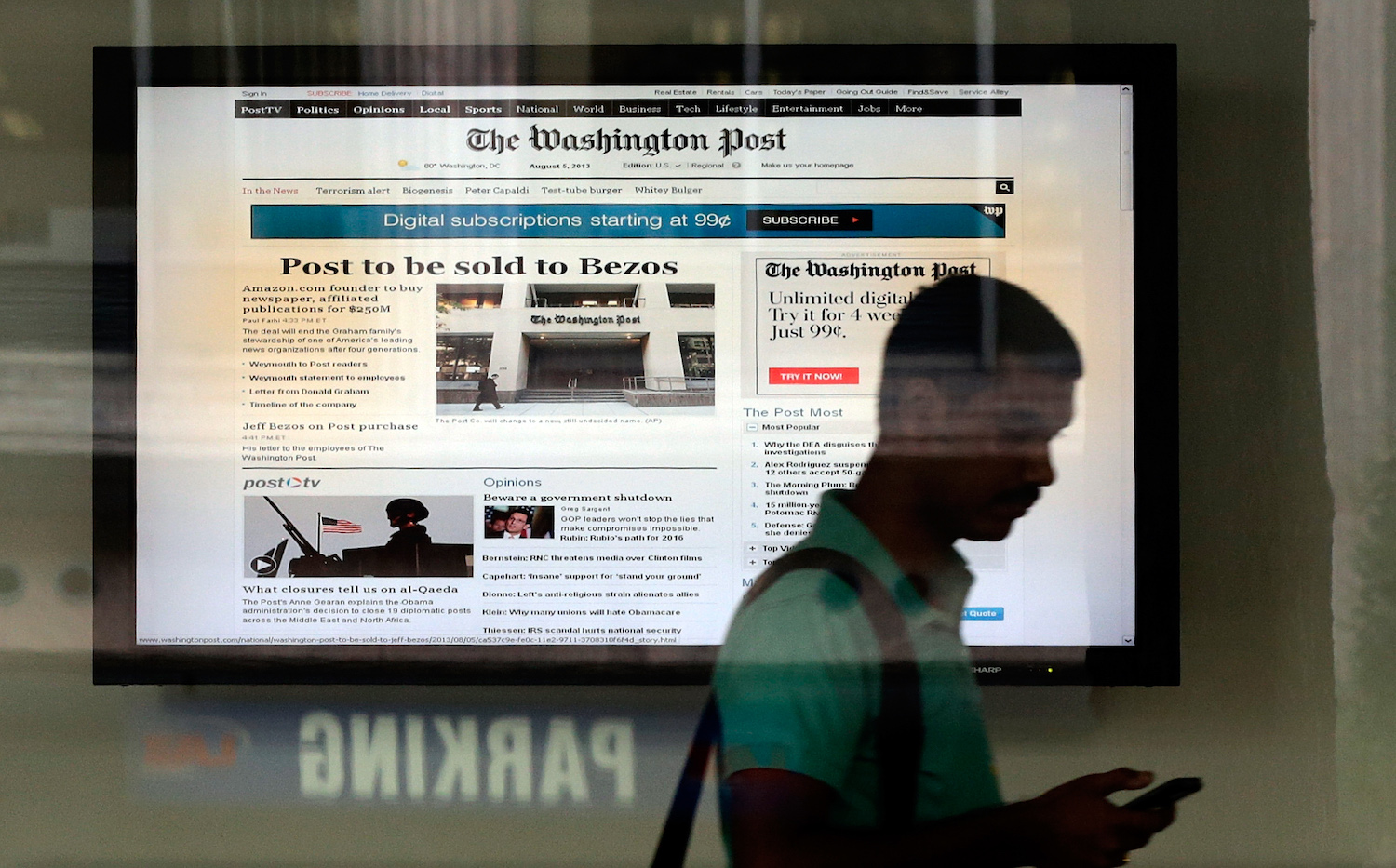
A man leaves the Washington Post building after the announced sale of the newspaper to Jeff Bezos on August 5, 2013. Win McNamee / Getty
When it came out in 1988, Noam Chomsky and Edward Herman’s Manufacturing Consent rattled the accepted view in post-Vietnam, post-Watergate America that journalists’ relationship to power was essentially adversarial. Instead, they argued, the institutional structure of American media — its dependence on corporate advertising and sources in the upper ranks of government and business — created a role for the press as creators of propaganda. Without any direct press censorship, with full freedom of speech, the media narrowed the political debate to exclude anything that offended the interests of the market or the state.
Thirty years after the publication of Manufacturing Consent, the journalist Matt Taibbi has made it his mission to provide an update of Chomsky and Herman’s critique for the twenty-first century. A columnist for Rolling Stone who has written at length about the 2008 financial crisis and Donald Trump’s 2016 campaign, Taibbi’s new book, The Fairway, is appearing in serial form on the newsletter site Substack.
Jacob Hamburger
You describe Manufacturing Consent as a book that “blew your mind” when you were a young journalist. What was so powerful about Chomsky and Herman’s critique of the media?
Matt Taibbi