Kathryn Bigelow’s Moral Parable
Kathryn Bigelow’s Detroit turns a deep-rooted urban rebellion into a “race riot.”
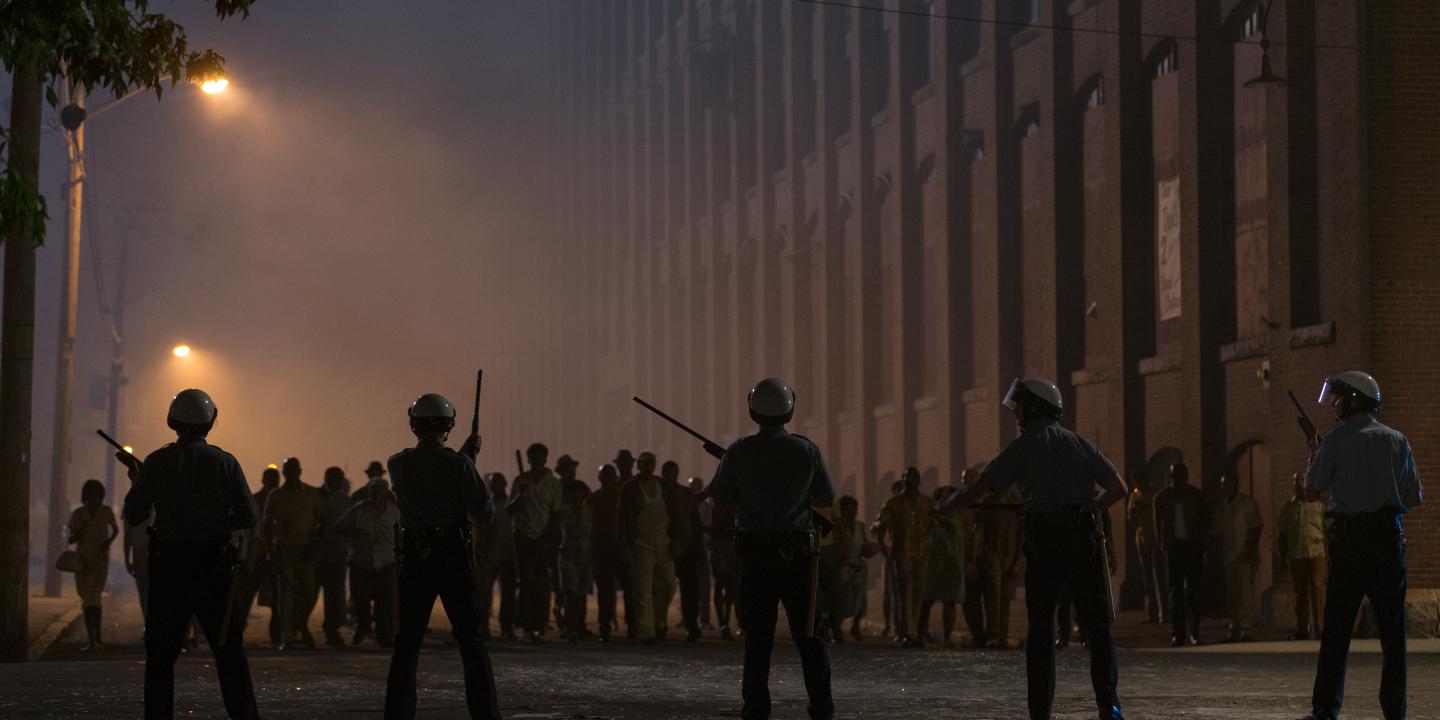
Scene from Kathryn Bigelow’s Detroit.Annapurna Pictures
Filmmaker Kathryn Bigelow has a clear ideological vision. In her movies about the war on terror, the hunt for Osama Bin Laden, and the Detroit Rebellion, spectacular violence, lawlessness, rogue agents, and moral failure all play central roles. Issues of political economy become, at best, footnotes.
Detroit, her most recent film, presents the city’s 1967 uprising as an utterly chaotic event, where irrational violence and racial enmity reigned. In typical Hollywood fashion, Bigelow turns a political event into a moral parable: victimized, angry black youth face off against rabidly racist white police officers.
This version of events isn’t new: her film largely reproduces the tropes used throughout the 1960s and 1970s to repress urban rebellions and justify the security regime that followed.